

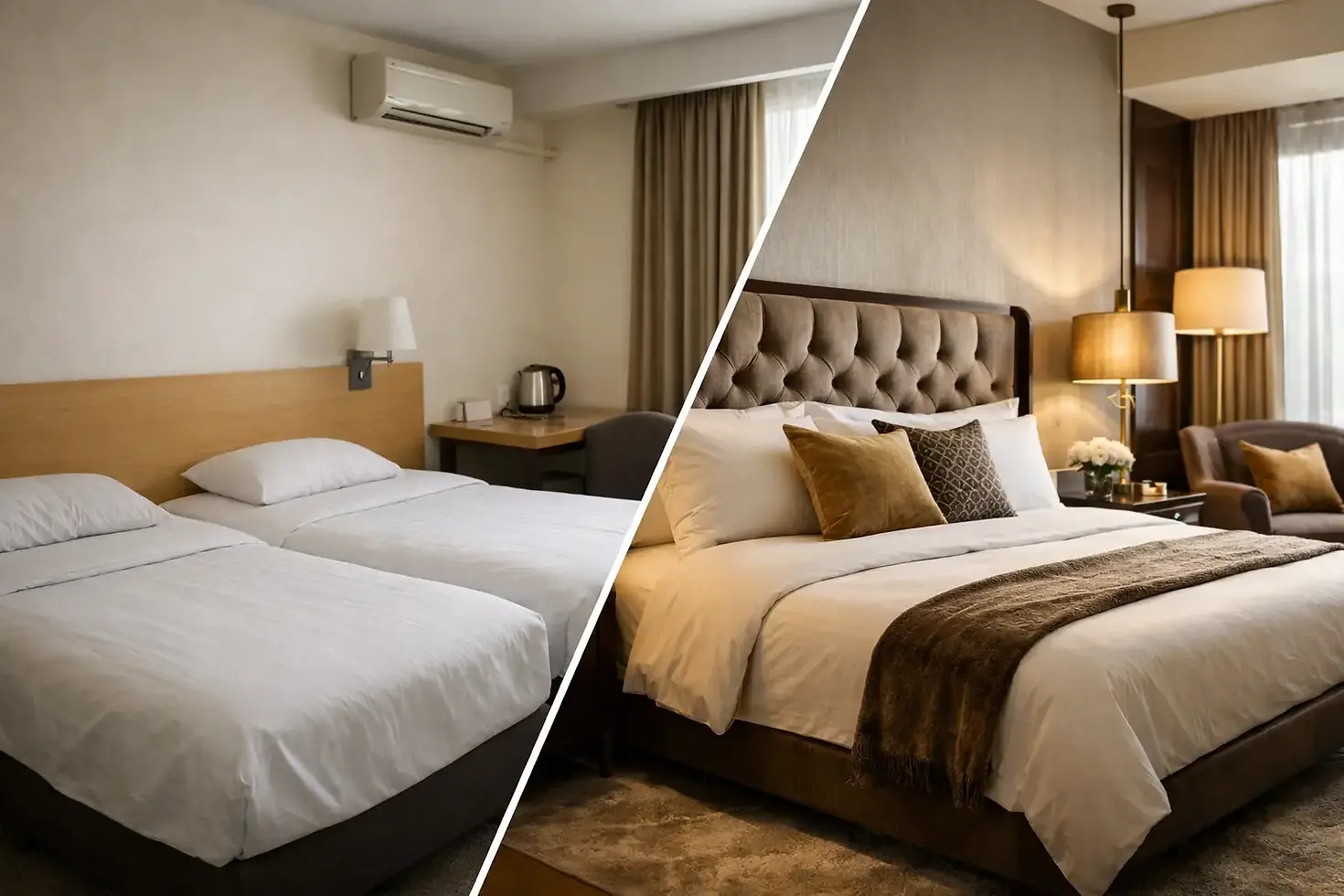
Budget Hotel Versus Boutique Hotel
- DE UPTOWN HOTEL

- 5 days ago
- 6 min read
A late check-in after a long drive, an early meeting across town, a quick family stopover before the next leg of the trip - this is where the choice between a budget hotel versus boutique hotel becomes practical, not theoretical. Most travelers are not choosing between good and bad. They are choosing between different priorities: lower cost and convenience, or a more styled and personalized stay.
If you know what matters most for your trip, the decision gets much easier. The right hotel is the one that fits your schedule, budget, and expectations without making you pay for features you will barely use.
Budget hotel versus boutique hotel: what is the real difference?
A budget hotel is built around essential comfort at an affordable rate. You usually get the basics done well: a clean room, private bathroom, air conditioning, Wi-Fi, a practical location, and a simple booking process. The focus is reliability and value.
A boutique hotel usually leans more into design, atmosphere, and a distinct guest experience. The room may feel more curated, the common areas may be more stylish, and the property may offer a more unique identity instead of a standardized setup. In many cases, you are paying not only for a place to sleep, but also for mood, aesthetics, and a more individualized feel.
That does not automatically make one better than the other. It depends on why you are traveling and how much time you will actually spend using the hotel beyond sleep and basic rest.
When a budget hotel makes more sense
For many urban trips, a budget hotel is the more practical choice. If you are in town for work, appointments, transit, medical visits, short events, or a quick weekend plan, you may not need premium decor or specialty services. You may simply need a room that is clean, accessible, comfortable, and fairly priced.
This matters even more when the hotel is just one part of your overall trip spending. Transportation, meals, parking, shopping, and event costs add up quickly. Saving on accommodation can free up room in your budget without reducing the core purpose of your trip.
A well-run budget hotel also tends to work better for travelers who value predictability. You know what you are booking. The offering is straightforward. Policies are often clearer, and the stay is centered on the basics that most guests actually use.
For small groups and families, this can be especially useful. If your main concern is getting everyone accommodated comfortably in a convenient location, paying extra for design-driven extras may not feel necessary.
When a boutique hotel is worth the extra cost
There are times when a boutique hotel earns its price. If the hotel itself is part of the experience, then design, ambiance, and service style matter more. A couple planning a special occasion, a traveler wanting a memorable city stay, or someone taking a slower, more leisure-focused trip may place higher value on those details.
Boutique hotels can also appeal to travelers who dislike generic accommodation. They may prefer a place with personality, stronger visual identity, and a more distinctive setting. In some cases, the quieter atmosphere or more customized service helps justify the higher nightly rate.
Still, the extra cost only makes sense if those features matter to you. If you leave early, return late, and mainly need a dependable place to rest, you may not get full value from the premium.
Price is not the only cost
When comparing a budget hotel versus boutique hotel, the room rate is only the starting point. The more useful question is total value.
A boutique hotel may have a higher base rate, plus additional charges tied to parking, deposits, premium snacks, or other add-ons. A budget hotel may offer a simpler setup with fewer optional extras, making the total spend easier to predict.
Time also has value. A strategically located budget hotel near business areas, transit routes, or city neighborhoods can reduce travel time and ride costs. That convenience can matter more than a more stylish property located farther from where you actually need to be.
For practical travelers, value often means paying for what you will use, not what looks impressive on a listing.
Comfort looks different for different travelers
One common mistake is assuming that affordable means uncomfortable, or that boutique automatically means more restful. Real comfort depends on execution.
A budget hotel that keeps rooms clean, beds usable, air conditioning reliable, and check-in efficient can meet the needs of many guests very well. If the property is maintained properly and the room supports a good night's sleep, that covers the most important part of the stay.
Boutique comfort may show up in different ways. It could be softer furnishings, more spacious room layouts, quieter design, or a more polished atmosphere. But these benefits vary widely from one property to another. A stylish room is not always the most practical one, especially if storage is limited, lighting is awkward, or the setup favors looks over function.
This is why travelers should compare actual stay needs rather than category labels. If your definition of comfort is clean, cool, quiet, and convenient, a budget hotel may check every box.
Location can outweigh style
For city travel, location often has a bigger impact than hotel category. A budget hotel in the right neighborhood can be the smarter choice than a boutique hotel in a less useful area.
If your plans involve meetings, shopping, dining, hospital visits, campus access, or local events, staying close to those destinations can save both money and stress. This is particularly relevant for short stays, where every hour counts.
Travelers moving around busy urban areas usually benefit more from easy access than from a decorative lobby or themed room concept. A dependable hotel in a well-connected area supports the trip better than a visually impressive stay that creates longer commutes.
That is one reason many guests choose practical city hotels with multiple branch options. A brand like DE UPTOWN HOTEL fits this need by focusing on accessible locations, affordable rates, and essential comfort for everyday travelers.
Service expectations should match the hotel type
Budget hotels and boutique hotels often serve guests differently, and that is not necessarily a problem. It just means your expectations should match what you book.
A budget hotel usually prioritizes efficient service. Guests often want quick booking, straightforward check-in, clear policies, and a room that delivers what was promised. That is a strong fit for business travelers, transit guests, and anyone who does not want unnecessary friction.
A boutique hotel may offer a more personalized service style, but that can vary. Some do it very well. Others focus more on presentation than responsiveness. Higher price does not guarantee better support.
If your priority is smooth logistics, a practical hotel with consistent operations may feel more useful than a more elaborate concept hotel. Dependability is often underrated until travel plans get tight.
Which option works best for different trip types?
For business travel, budget hotels usually make strong sense. You need rest, convenience, Wi-Fi, and a manageable rate, especially for repeated stays. Unless client-facing image is part of the trip, paying extra for atmosphere may not deliver much return.
For family travel, the answer depends on the purpose of the stay. If the hotel is mainly a base between activities, budget-friendly accommodation is often the better fit. If the trip is centered on celebration or downtime at the property, boutique may be worth considering.
For couples, boutique hotels can make sense for anniversaries or slower weekends, but not every getaway needs that upgrade. A clean, comfortable, well-located budget stay can still support a good trip if the focus is on exploring the city.
For solo travelers, budget hotels tend to offer the best balance of cost and function. For short stays especially, reliability often matters more than a curated experience.
How to choose without overthinking it
Start with the purpose of your trip. Ask yourself how many hours you will realistically spend in the hotel, what amenities you truly need, and whether style is part of the value for you.
Then look at the full picture: nightly rate, location, transport savings, room essentials, and policy clarity. If a budget hotel covers your needs well, there is no reason to pay boutique prices just for the label. If the stay itself is part of the occasion, spending more may be justified.
The better choice is not the one with the stronger image. It is the one that matches your trip honestly. Book for the stay you are actually having, not the one that only looks good in photos.



Comments